Clearing a Cape Coral lot starts with finding the owls
North Cape and Burnt Store lots cleared of slash pine, palmetto, melaleuca and Brazilian pepper for a build — after every burrowing owl and gopher tortoise burrow on the lot has been found, flagged and buffered.
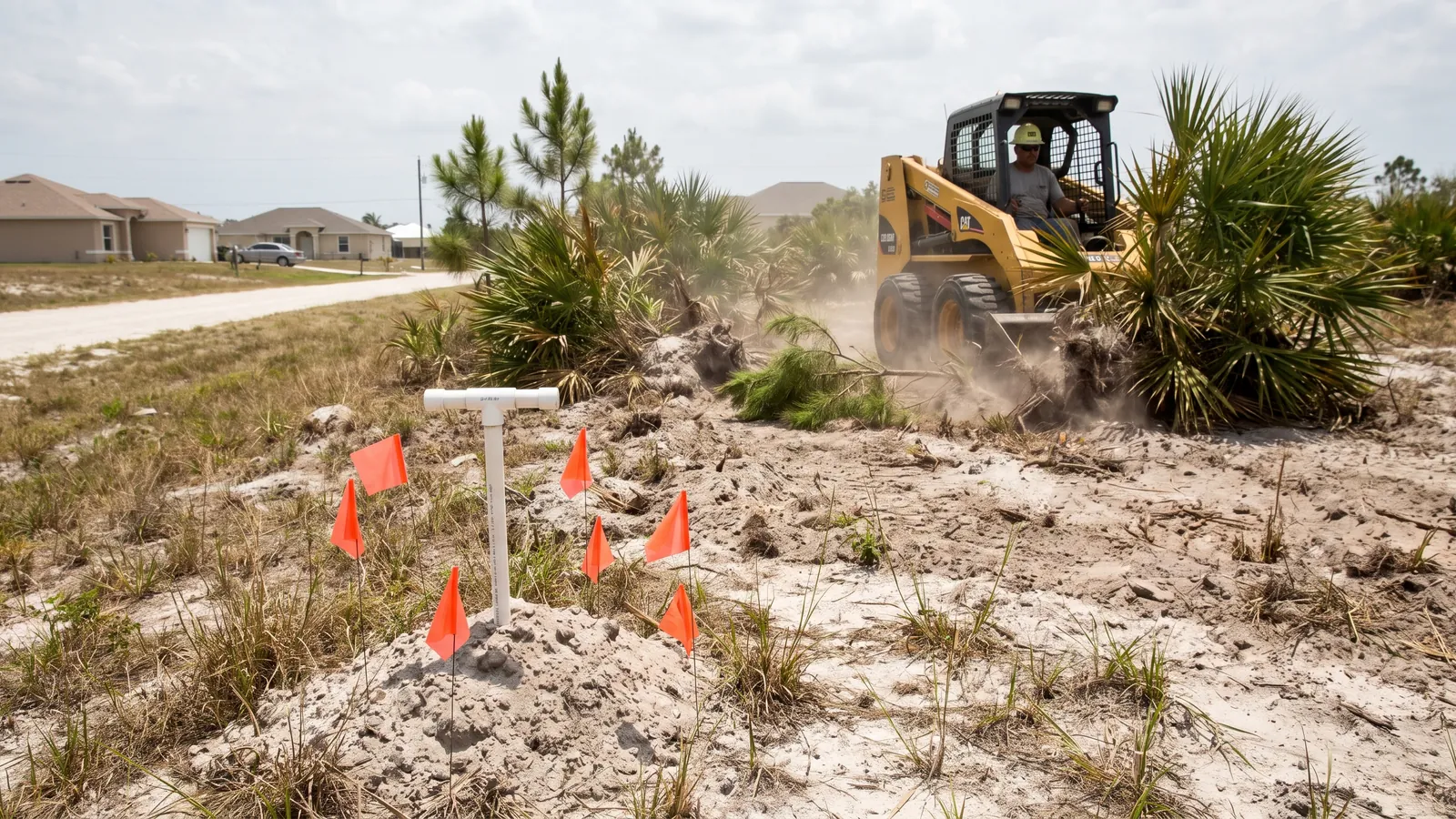
Cape Coral is about sixty percent built out, and the city expects three-quarters of its new homes over the next decade to go up in the North Cape — the units along Burnt Store Road, out past Chiquita and Kismet, and north of Pine Island Road. Those lots are the original pine flatwoods: slash pine, saw palmetto, wax myrtle, and in the wet spots melaleuca and Brazilian pepper. They're also where the burrowing owls and gopher tortoises live. Cape Coral has more than a thousand nesting pairs of burrowing owls, the largest population in Florida and the city's official bird, and they nest in the ground on exactly these open, mowed lots. Gopher tortoises dig their burrows in the same sandy soil.
Both are state-threatened, and the rules are specific. No clearing, mowing, grading or driving within 10 feet of an active owl burrow, and within 33 feet during nesting season, February 15 to July 10. No disturbance within 25 feet of a gopher tortoise burrow, and if a burrow can't be avoided the tortoise has to be relocated under an FWC permit by an authorized agent. If an owl burrow sits where the house footprint has to go, the owner applies to FWC for a permit — issued as a last resort, with a mitigation contribution — and the city asks for a starter burrow elsewhere on the lot. Bald eagle nests carry a 1,100-foot management zone in the city's plat units that have them. We walk every lot before a machine arrives, flag every burrow, build the clearing plan around them, and tell you up front if you'll need FWC paperwork. Then we clear: pines felled or sectioned, palmetto and pepper grubbed, melaleuca stump-treated, the required native trees for the lot's certificate of occupancy saved where the site plan allows, and everything hauled — a vacant lot gets no curbside pickup.
What's included
Wildlife walk first
Every burrowing owl and gopher tortoise burrow found, flagged and buffered — 10 ft (33 ft in season) for owls, 25 ft for tortoises — before any machine moves.
FWC paperwork explained
If a burrow can't be avoided, we tell you what permit the owner needs and who relocates a tortoise.
Selective clearing
The native trees the lot will need at its certificate of occupancy kept where the site plan allows; invasives taken out entirely.
Pines and palmetto
Slash pines felled or sectioned, saw palmetto and wax myrtle grubbed, melaleuca stump-treated.
Hauled, not piled
Vacant lots get no curbside pickup; everything chipped and hauled or ground on site.
Builder-ready
Cleared to the site plan with the burrow buffers staked, so the surveyor and the pad crew can start.
Lot clearing cost in Cape Coral, FL
| Job | Typical price | Notes |
|---|---|---|
| Standard Cape lot, 10,000 sq ft, light brush | $1,500 – $3,500 | Palmetto, pepper, a few small pines |
| Standard lot, heavy pines | $3,500 – $7,000 | Eight to twenty slash pines, grubbing, hauling |
| Double or triple lot | $5,000 – $12,000 | Per site plan |
| Selective clearing around kept trees | + $500 – $1,500 | Protecting the required natives |
| Stump grinding after clearing | $100 – $250 per stump | Or ground on site in bulk |
| Burrow survey | Free with estimate | Flagging and buffer staking included |
These are 2026 Lee County ranges so you can budget. Your written price is itemized — the climb or bucket work, rigging, chipping and haul-off, stump grinding, crane time, the wildlife and mangrove check — and good for 30 days.
Recent work
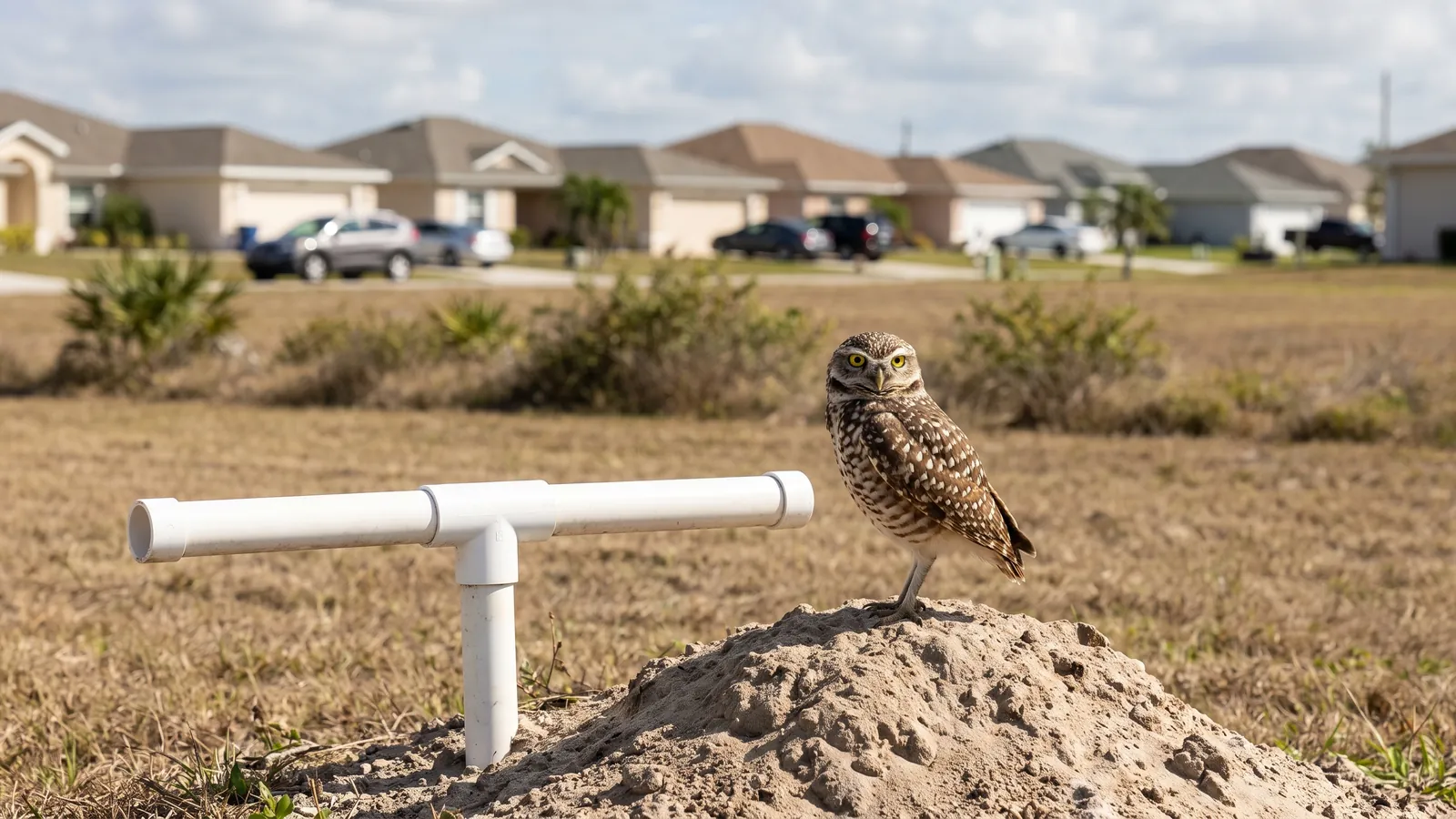
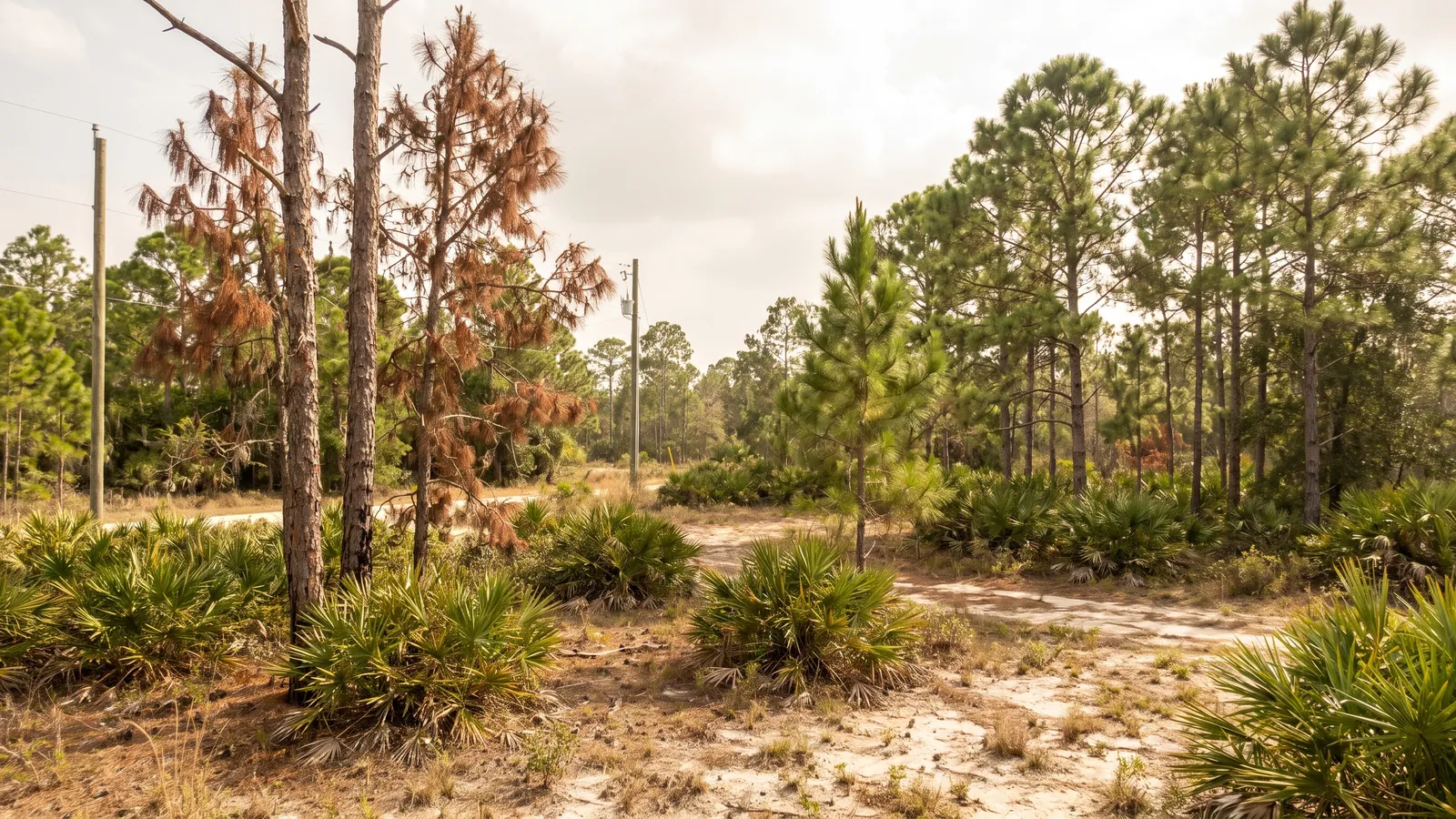
Questions we get about lot clearing
Does Cape Coral require a permit to clear a vacant lot?
Clearing is tied to the building permit — when you're building, the clearing is covered by it. Clearing a lot with no construction planned is treated differently, and the city's lot-mowing program already mows every unimproved lot thirteen times a year, so the question is usually what you're building and when. The wildlife rules apply either way.
What happens if there's an owl burrow where the house goes?
The owner applies to FWC for an incidental take permit, which the state issues only as a last resort after alternatives are considered, with a mitigation payment, and the city asks that a starter burrow be installed elsewhere on the property. Outside nesting season the process is faster; inside it, nothing within 33 feet of an active burrow moves. We flag the burrow and walk you through it; the application is the owner's.
And a gopher tortoise?
Twenty-five-foot buffer, and if the burrow is in the footprint the tortoise is relocated under an FWC permit by an authorized agent before clearing. We don't relocate tortoises ourselves; we flag them and refer you to an agent.
Do I have to keep any trees?
The city requires a set number of canopy trees, accent trees or palms on every finished single-family lot, at least half of them Florida natives. Keeping a good slash pine or live oak on the lot counts and saves the cost of planting one; we clear around the keepers when the site plan allows.
Can you clear a lot in Lehigh Acres or on Pine Island?
Yes. Lehigh is unincorporated Lee County, where a single-family clearing permit applies only to lots of five acres or more; on Pine Island it's two acres and the county's vegetation rules are stricter. We check the parcel before we quote.